

Flavonoids are some of the most overlooked compounds in the hemp plant, but they play a much bigger role than most people realize. While cannabinoids like CBD and Delta-9 often get all the attention, flavonoids quietly influence the plant’s color, aroma, and overall wellness potential.
They help shape how a full-spectrum product feels, tastes, and even supports your body.
These natural plant compounds don’t work alone. They interact with cannabinoids and terpenes, contributing to what many users describe as smoother, more balanced effects. If you want to understand why full-plant extracts often feel different from isolates, flavonoids are a big part of the story.
In this guide, you’ll learn what flavonoids are, how they work, which ones appear in the hemp plant, and how they support the entourage effect.
What Are Flavonoids?
Flavonoids are natural plant compounds that give many fruits, flowers, and herbs their color, flavor, and protective qualities. They help plants survive by shielding them from UV light, pests, and environmental stress.
You can think of them as part of the plant’s built-in defense system.
The hemp plant also contains a range of flavonoids, including a unique group known as cannaflavins. These compounds don’t affect your body the same way cannabinoids like CBD or Delta-9 do, but they still play an important role in the overall experience of hemp-derived products.
Flavonoids contribute to the way hemp looks, tastes, and feels. They provide natural antioxidant and anti-inflammatory support and help distinguish subtle differences among full-spectrum extracts, broad-spectrum extracts, and CBD isolates.
Types of Flavonoids
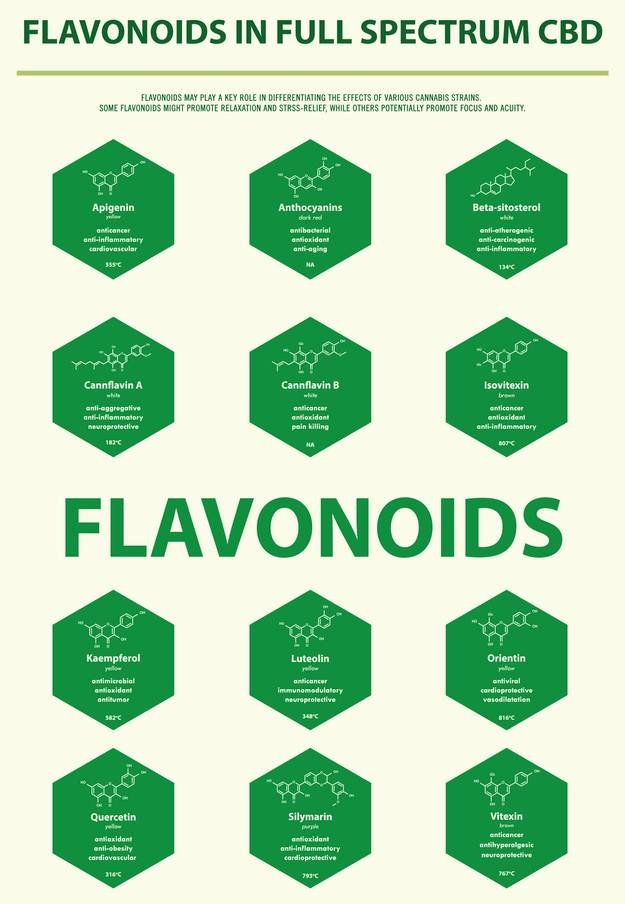
The hemp plant contains a wide range of flavonoids, but a few stand out for their unique roles, potential benefits, and contributions to the overall hemp experience.
Some of these flavonoids are found in many plants, while others—called cannaflavins—are unique to hemp. Here’s a closer look at the most notable ones.
Cannaflavins (A, B, and C)
Cannaflavins are exclusive to the hemp plant. They are known for their strong anti-inflammatory potential, possibly stronger than that of many common plant compounds.
They also influence how hemp feels and contribute to the plant’s overall wellness-supporting properties.
Cannaflavins are a major reason why full-spectrum extracts often feel more complete than isolated cannabinoids.
Apigenin
A flavonoid known for its calming and antioxidant properties. In hemp, apigenin contributes to subtle relaxation and stress-supportive effects, working alongside CBD to promote a more balanced experience.
Quercetin
Quercetin is found in many plants and is well known for its antioxidant activity. Hemp supports the plant’s color and helps defend the plant against environmental stress. It also plays a quiet but meaningful role in the entourage effect.
Kaempferol
This flavonoid supports the plant’s defense system and provides antioxidant activity. In hemp, kaempferol helps shape the plant’s pigmentation and may contribute to a sense of overall balance in full-spectrum products.
Luteolin
Luteolin offers natural antioxidant and anti-inflammatory support. Its presence in hemp contributes to the plant’s wellness potential and works in harmony with cannabinoids and terpenes.
Orientin
Found in a variety of plants, orientin is also present in hemp and supports antioxidant and soothing effects. It helps round out the plant’s full therapeutic profile.
How Flavonoids Work in the Body?
Flavonoids interact with your body in subtle but meaningful ways. They don’t bind to cannabinoid receptors the way CBD or Delta-9 do, but they work through different biological pathways that support balance, protection, and overall well-being.
Here’s how they work:
1. They Provide Natural Antioxidant Support
Flavonoids help neutralize free radicals created by stress, pollution, and everyday metabolic processes. By reducing oxidative stress, they support healthier cells and contribute to the long-term wellness potential of hemp extracts.
This antioxidant role is one reason flavonoids are valued in full-plant formulations.
2. They Help Calm Inflammation
Some flavonoids, especially cannaflavins, show strong anti-inflammatory activity. Instead of numbing or masking discomfort, they influence the signaling pathways that regulate inflammation in the body.
This aligns well with the soothing and balancing effects people often associate with CBD.
3. They Influence Cellular Signaling
Flavonoids interact with various enzymes and receptors in the body—not the CB1/CB2 receptors, but others involved in:
immune response
stress response
inflammation
energy balance
These interactions help shape how the body reacts to stressors and how smoothly it returns to balance.
4. They Enhance the Total-Plant Experience
Flavonoids don’t create strong sensory effects on their own, but they deepen the character of hemp products by:
adding complexity to flavor
supporting the entourage effect
complementing cannabinoids like CBD and THC
helping the body maintain balance more naturally
In this way, flavonoids help round out the effects of hemp extracts, giving full-spectrum and broad-spectrum options a more complete feel than isolates.
Flavonoids, Terpenes & Cannabinoids: How They Work Together?
Hemp’s effects don’t come from a single compound. Instead, they come from the interaction of three major groups: cannabinoids, terpenes, and flavonoids. Each group plays a different role, but they work together to create the complete experience users feel from full-spectrum and broad-spectrum hemp products.
Here’s how they combine to form a more balanced, effective plant profile:
1. Cannabinoids: The Primary Active Compounds
Cannabinoids like CBD, CBG, Delta-9 (hemp), Delta-8, and CBN interact directly with the body’s endocannabinoid system (ECS).
They influence:
mood
sleep
stress
inflammation
discomfort
overall balance
Cannabinoids are the “main drivers” of hemp’s effects, but they don’t always act alone.
2. Terpenes: Aroma + Subtle Effect
Terpenes give hemp its aroma—earthy, citrusy, piney, herbal—and help shape how a product feels. Depending on the terpene profile, hemp extracts may feel more:
calming
uplifting
focused
relaxing
Terpenes set the tone for the experience and often influence how cannabinoids interact with the body.
3. Flavonoids: Color + Antioxidant & Inflammation Support
Flavonoids don’t change your mindset, but they support:
antioxidant activity
inflammation modulation
cellular balance
overall wellness synergy
They affect the plant’s color and contribute to the nuanced character of full-spectrum hemp.
4. Synergy: The Entourage Effect in Action
When these three groups work together, they create what many call the entourage effect — a natural synergy where:
cannabinoids deliver primary effects
terpenes shape mood and feel
flavonoids add antioxidant and inflammatory support
all three enhance each other’s impact
The result is a more rounded, smoother, and complete experience than cannabinoids alone can provide.
The harmony between cannabinoids, terpenes, and flavonoids is what makes full-spectrum and broad-spectrum products stand out from isolates.
Are Flavonoids Safe?
Yes — flavonoids are safe for most people. They’re natural plant compounds found in fruits, vegetables, herbs, teas, and the hemp plant. You already consume flavonoids every day without even realizing it.
In the context of hemp-derived products, here’s what you need to know:
1. Naturally Occurring & Well-Tolerated
Flavonoids are not synthetic chemicals. They come directly from plants, and the body knows how to process them. Hemp contains them in small, natural amounts that are consistent with what people get from a normal diet.
2. Non-Psychoactive
Flavonoids do not affect your mind or perception. They don’t bind to CB1 receptors, and they don’t change how you feel mentally. Their role is supportive, not intoxicating.
3. They Don’t Cause Dependence
Flavonoids are not addictive and do not create tolerance. They don’t trigger reward pathways the way psychoactive substances do.
4. No Risk of Side Effects
Side effects from flavonoids are extremely rare, especially in the low concentrations found in most hemp-derived extracts.
When issues do occur, it’s usually from high-dose supplements, not full-spectrum oils or hemp flower. Typical hemp products contain flavonoids in levels far below what you get from everyday fruits or herbs.
5. Safe for Daily Use in Hemp Products
Since they occur naturally in the plant, flavonoids are part of what makes full-spectrum extracts feel richer. They’re safe for daily use as part of:
full-spectrum CBD products
broad-spectrum products
hemp flower
vapeable hemp products
They simply complement cannabinoids and terpenes without adding risk.
6. People With Severe Plant Allergies Should Use Caution
Very rarely, someone sensitive to specific plant compounds may react to flavonoids. This usually applies to people with strong allergies to a particular flower or herb family.
In general, hemp-derived flavonoids are mild and well-tolerated in most people.
Final Thoughts
Flavonoids may not be as well-known as CBD or hemp-derived THC, but they play an important role in how full-plant hemp products feel and function. They add color, character, and wellness-supporting properties that strengthen the overall profile of the plant.
When combined with cannabinoids and terpenes, flavonoids help create a more balanced, complete experience — the kind you get from quality full-spectrum and broad-spectrum extracts.
Understanding flavonoids helps you appreciate the full picture of what the hemp plant offers. They’re one more reason why whole-plant hemp extracts stand out, and why the synergy between cannabinoids, terpenes, and flavonoids matters more than most people realize.
Disclosure:
The information provided in this article is meant for general use only and may not always suit everyone’s individual needs. Your health and wellness are personal, so consult a medical professional for personalized advice before making decisions based on this content.
For more information, please read our Disclosure Policy.